NASA unveils 12 stunning space images revealing cosmic mysteries
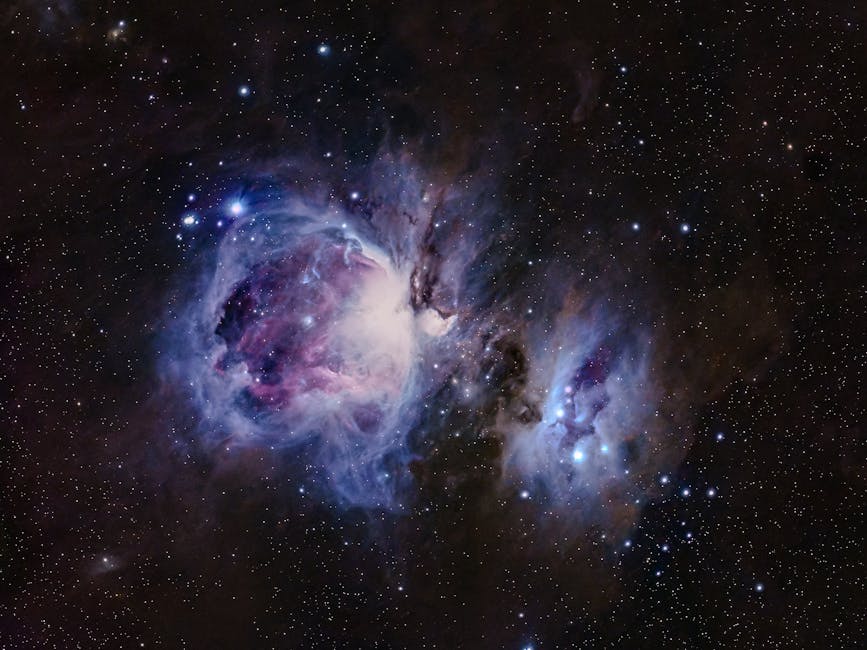
Discover NASA's latest space images, from newborn stars to the farthest galaxies, captured by cutting-edge telescopes like James Webb and Hubble.
NASA unveils 12 breathtaking images of the cosmos
NASA’s recent release of 12 extraordinary space images has once again left humanity in awe. Captured by powerful telescopes such as the James Webb Space Telescope, Hubble, and the newest addition, the Vera Rubin Observatory, these images reveal everything from dying stars to galaxies formed shortly after the Big Bang. The photographs not only redefine our understanding of the universe but also deepen our curiosity about what lies beyond.
Below, we explore these striking snapshots of the cosmos, each telling its unique story of creation, destruction, and the ongoing evolution of the universe.
The Helix Nebula: A star’s final breath
Captured by the James Webb Space Telescope in January 2026, the Helix Nebula is the vivid remnant of a dying star. Located 650 light-years away in the constellation Aquarius, this planetary nebula has baffled astronomers for centuries. Webb's infrared view revealed spectacular details previously unseen, including 7,000 massive gas knots resembling comets. Each of these knots boasts "heads" twice the size of our solar system and trails stretching 100 billion miles.
What’s most compelling is the color-coded gas, transitioning from blue (hotter) near the nebula’s core to reddish edges where planet-forming dust is accumulating. This profound image captures the cycle of life and death in space, as dying stars seed the creation of new worlds.
Draculus Chvito: A solar system in the making
Hubble captured an extraordinary protoplanetary disk in December 2025, nicknamed Draculus Chvito. Resembling a steak sandwich, the image reveals a swirling cloud of gas and dust surrounding a young star—raw materials eventually forming planets. This colossal structure measures 400 billion miles in diameter, 40 times larger than our solar system.
The name comes from quirky inspirations: the "fang-like" filaments and a nod to Uruguay’s national sandwich, the "Chivito." Such humor notwithstanding, the image holds immense scientific significance as it shows a chaotic, early stage in the formation of solar systems.
Pillars of Creation revisited
The iconic Pillars of Creation were first made famous by Hubble in 1995. However, Webb’s infrared capabilities transformed our perception by unveiling what lay hidden inside. Webb’s photo reveals hundreds of newborn stars and glowing jets of red material from still-forming stars. Stretching four light-years high, these gas-and-dust towers are gradually eroding due to radiation from nearby massive stars.
This evolving structure, located 6,500 light-years away within the Eagle Nebula, symbolizes both the violent and creative processes of star formation.
| Feature | Hubble (1995) | James Webb (2026) |
|---|---|---|
| Captures Visible Light | ✅ | ❌ |
| Infrared Imaging | ❌ | ✅ |
| Inner Star Detail | ❌ | ✅ |
The exposed cranium nebula: PMR1
In February 2026, the James Webb Telescope captured an image resembling a glowing human skull, aptly nicknamed the "Exposed Cranium Nebula." Located 5,000 light-years away in the constellation Vela, it showcases a transparent outer shell coupled with an inner brain-like cloud of glowing gas.
This nebula's eerie appearance underscores its tumultuous origin—a dying star shedding its outer layers. The ultimate fate of its central star remains uncertain, with possibilities ranging from a supernova to a white dwarf lingering quietly in space.
Triid and Lagoon Nebulae: The Vera Rubin Observatory's grand debut
The unveiling of the Vera Rubin Observatory’s first image was monumental. Using the largest digital camera ever built, the observatory captured the Triid and Lagoon Nebulae, both stellar nurseries situated in the Sagittarius constellation. Combining 678 exposures into a sweeping image, the observatory produced breathtaking detail with two trillion pixels of data.
Its future role as a "time-lapse creator" of the universe promises unparalleled insights, scanning the southern sky every few nights for 10 years.
Star-cluster Pismis 24: A violent stellar nursery
Within the Lobster Nebula, 5,500 light-years away, lies Pismis 24, one of the youngest and most dynamic star clusters discovered. Its dense orange clouds of gas and dust are being eroded rapidly by fierce radiation from infant stars.
At the cluster's core are two massive stars weighing 74 and 66 times the mass of the Sun. This is a dramatic window into stellar population density and how new stars are birthed through cyclical destruction.
Cosmic hourglass: The Cigar Galaxy (M82)
Webb turned its focus to the Cigar Galaxy, 12 million light-years away in Ursa Major. Galactic winds erupt like fiery outflows, shaping an "hourglass" appearance. This starburst galaxy forms stars 10 times faster than our Milky Way, fueled by gravitational interactions with a large neighbor, M81.
The earliest supernova
A gamma-ray burst detected in March 2025 led to the discovery of a supernova occurring 730 million years after the Big Bang—the earliest supernova ever recorded. Webb provided confirmation, tracing its host galaxy as a few faint red pixels.
This finding pushes the boundaries of known galactic history and offers insight into the universe's formative years.
Supernova Hope: A time-bending phenomenon
The image of galaxy cluster G165 revealed a single supernova, "Hope," appearing three times due to the cluster’s gravitational lensing. Each "duplicate" arrives at different intervals, offering a rare glimpse into the same event at three stages of its explosion. This discovery also offers sharper measurements of the Hubble constant, deepening debates about the cosmos' expansion rate.
Practical takeaways for astronomy enthusiasts
These unprecedented images serve as more than visual marvels—they advance scientific understanding:
- Infrared vision: Webb's technology reveals details invisible with ground-based telescopes.
- Galactic history: Images like the earliest supernova and Draculus Chvito offer glimpses into cosmic eras we've only theorized about.
- Global collaboration: Ground-based observatories like Vera Rubin and space missions like Hubble work together to solve universal puzzles.
Conclusion
The cosmos has once again revealed its many faces, thanks to advancements like the James Webb Telescope and the Vera Rubin Observatory. From a dying star seeding new worlds to galaxies colliding and forming, these images remind us how little we’ve scratched the surface of understanding the universe. With ongoing missions and cutting-edge technology, we can anticipate even more groundbreaking discoveries.
Staff Writer
Daniel reports on biology, climate science, and medical research.
Comments
Loading comments…


