NASA’s Search for Planet 9: Evidence for a Hidden Giant in the Solar System
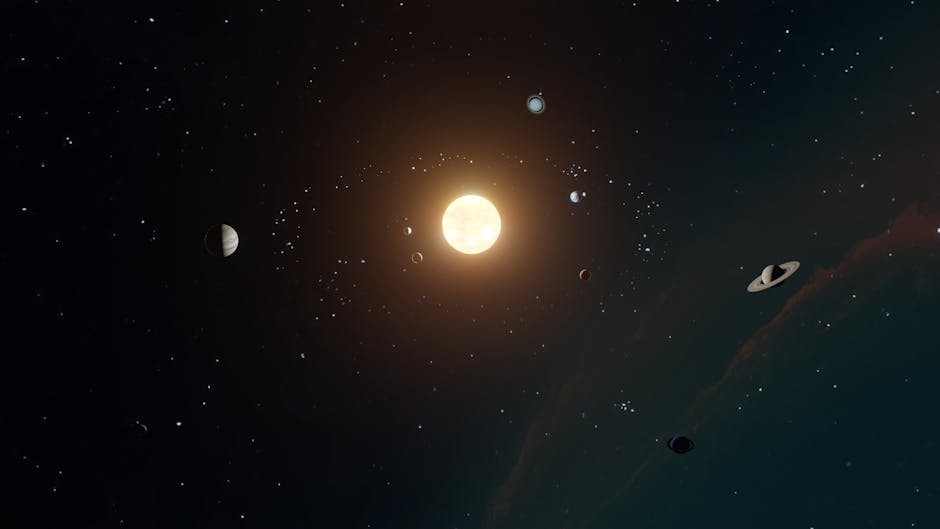
NASA researchers might have found evidence for Planet 9, a mysterious world beyond Neptune. Here's what we know about its potential existence.
NASA’s ongoing exploration of the cosmos has brought humanity a step closer to uncovering one of the solar system’s most enduring mysteries: the existence of Planet 9. For years, scientists have speculated about a massive, unseen object influencing the orbits of distant celestial bodies. Now, new research offers compelling hints that Planet 9 might indeed be lurking far beyond Neptune.
The Mystery of the Kuiper Belt
The story of Planet 9 begins in the Kuiper Belt—a donut-shaped region of icy debris situated 2.5 billion miles or more from Earth. This area lies beyond Neptune and contains numerous small objects, including dwarf planets. What draws attention here is the peculiar behavior of certain Kuiper Belt objects (KBOs). These distant bodies follow strangely clustered and tilted orbits, which deviate significantly from those predicted by known gravitational forces in the solar system.
Researchers have proposed that these unusual trajectories might be caused by the gravitational pull of a yet-undiscovered ninth planet. Dubbed "Planet 9," this hypothetical world could be the missing piece that explains these anomalies.
Characteristics of Planet 9
If Planet 9 exists, its properties would make it a giant compared to Earth. Current estimates suggest it could:
- Have a mass 5 to 10 times that of Earth
- Reside between 290 and 700 times farther from the Sun than Earth
- Take 10,000 to 20,000 years to complete one orbit around the Sun
- Potentially exhibit a steep orbital inclination of 15° to 25° relative to the solar plane
Its composition might resemble that of Uranus or Neptune, featuring a core of rock and metal surrounded by layers of thick hydrogen and helium gas. Alternatively, it could be a dense, rocky planet similar to Earth, with a smaller overall size.
New Evidence for Planet 9
Despite decades of searching, Planet 9 has not been directly observed. However, researchers recently employed a clever new method involving archived infrared data. Using two space missions—IRAS from the 1980s and AKARI from the 2000s—astronomers searched for faint, slow-moving objects that could fit Planet 9's expected profile.
In their analysis, the team identified 13 potential candidates, narrowing them down to one promising object. This celestial body appears to be moving slowly across the sky, consistent with what would be expected from a distant planet. Its estimated mass is between 7 and 17 times that of Earth, and it lies roughly 500 to 700 times farther from the Sun than our planet.
Overcoming Challenges
While this new candidate is promising, there are hurdles to firmly identifying it as Planet 9. The available data lacks the precision needed to calculate its orbit definitively. To refine their observations, scientists plan to use telescopes with advanced cameras like the Dark Energy Survey Camera (DECam).
Why Planet 9 Matters
Discovering Planet 9 would significantly reshape our understanding of the solar system. Here’s why:
Explaining Orbital Anomalies
Certain Kuiper Belt objects show clustered orbits, tilted paths, and unusual groupings—all phenomena that could result from the gravitational influence of a massive, unseen planet. Even the solar system’s planetary plane is inexplicably tilted by about 6°, which some scientists attribute to Planet 9.
Stabilizing the Outer Solar System
The existence of Planet 9 could explain why some distant space rocks maintain stable orbits instead of being ejected by Neptune’s gravity. Its presence might also clarify why some objects orbit the Sun backward—an oddity in the solar system.
A Missing Super-Earth
If real, Planet 9 would be classified as a “super-Earth,” a category of planet increasingly observed in other star systems but absent from ours. This discovery would make our solar system more comparable to others we’ve studied.
Historical Context
Speculation about hidden planets isn’t new. In the 19th century, astronomers predicted Neptune’s existence based on irregularities in Uranus’s orbit. Similar predictions fueled the search for Pluto and other mysterious objects. Even today, strange bodies like Sedna, with its unusual elongated orbit, hint at unexplained forces in the solar system.
How Long Until We Know for Sure?
The hunt for Planet 9 is far from over. Scientists are turning to new tools and technologies to refine their search. NASA’s upcoming Nancy Grace Roman Space Telescope could play a pivotal role, offering sensitive infrared capabilities to scan the distant reaches of space.
The Road Ahead
Finding Planet 9, if it truly exists, is no simple task. Observing such a faint and distant object requires immense precision. Researchers must comb through vast sections of the sky to locate it again after its last potential sighting.
Still, the possibilities are tantalizing. If confirmed, Planet 9 would be one of the most significant astronomical discoveries of the 21st century, offering insights into the formation of the solar system and its hidden dynamics.
Key Takeaways
- Scientists have compelling evidence suggesting the existence of Planet 9, a massive, distant planet.
- New observational techniques using infrared data have identified a promising candidate.
- If real, Planet 9 could explain orbital anomalies and provide missing links to the solar system’s formation.
- Advanced telescopes and follow-up observations are essential to confirm its existence.
For now, Planet 9 remains an intriguing mystery, but it’s one that may soon unravel with further exploration. Whether it’s the distant shepherd of the Kuiper Belt or simply a phantom of gravitational calculations, the search alone is deepening our understanding of the solar system.
Staff Writer
Emily covers space exploration, physics, and scientific research. Holds a degree in astrophysics.
Comments
Loading comments…


