NASA’s Vision: Preparing for Sustainable Moon and Mars Exploration
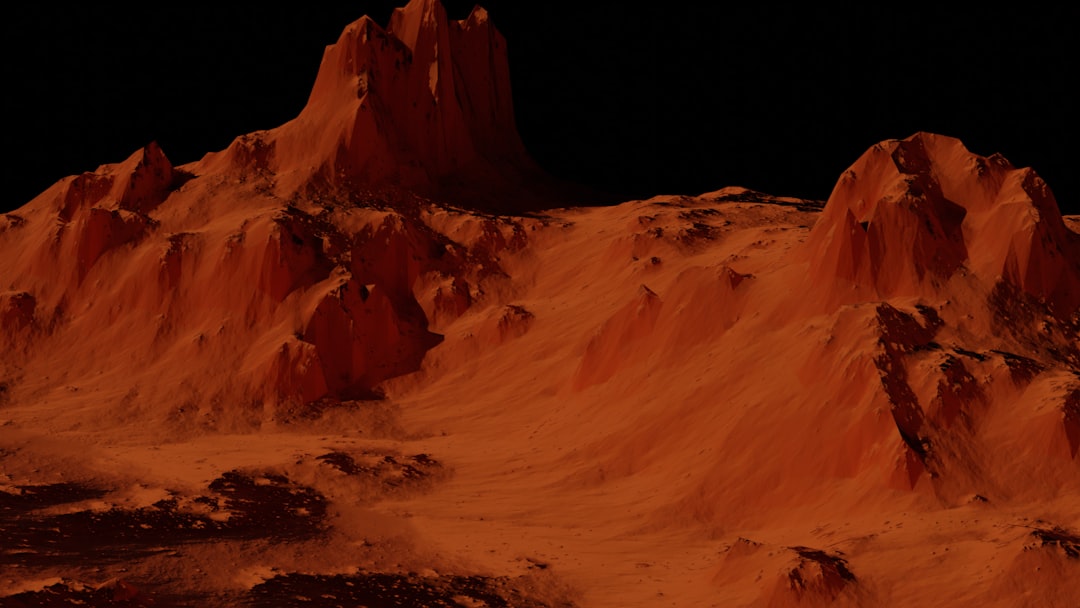
NASA is embarking on its next great leap with missions designed to establish sustainable Moon exploration and prepare for the journey to Mars.
NASA has long been at the forefront of human exploration, continually pushing the boundaries of what is possible in space. With over 60 years of achievements—including the Apollo Moon landings and the sustained operation of the International Space Station (ISS)—NASA now turns its focus to the next chapter of space exploration. The agency is preparing for sustainable lunar exploration as a stepping stone to even more ambitious goals, including human missions to Mars.
The Return to the Moon
NASA’s Artemis program is the cornerstone of its renewed efforts to explore the Moon. Unlike the Apollo missions of the 1960s and 70s, which were designed for short-term human presence, Artemis focuses on building a sustainable lunar ecosystem. This program aims to enable longer stays on the Moon, providing critical experience and introducing new technologies that will support deeper space exploration.
Central to this initiative is the development of the Orion spacecraft, a state-of-the-art vehicle designed to carry astronauts to the Moon and beyond. Alongside Orion, NASA is working on the Space Launch System (SLS), a powerful new rocket capable of carrying heavy payloads to lunar orbit and beyond. The Gateway—a unique lunar outpost—will function as a staging area for lunar surface missions and a hub for longer-term operations.
Key Features of the Artemis Program
| System/Feature | Purpose |
|---|---|
| Orion Spacecraft | Transport astronauts to lunar orbit |
| Space Launch System (SLS) | Carry heavy payloads into space |
| Gateway Outpost | Staging area for lunar operations |
| Lunar Surface Innovations | Develop technology for long-term human presence |
NASA’s commitment to sustainability means designing systems that are reusable and adaptable, reducing costs for future missions while ensuring the safety and well-being of the astronauts.
Preparing for Mars
The Moon is not just a destination—it is a training ground for Mars. Sustainable operations on the lunar surface will provide NASA with the vital knowledge and capabilities needed for human exploration of the Red Planet, a much more distant and challenging target.
Mars missions will require self-sufficiency, given the immense distance from Earth. This includes next-generation habitats capable of supporting extended stays, reliable life-support systems, and efficient energy sources. The technologies tested and refined on the Moon will be directly applicable to Mars missions, where returning supplies from Earth quickly is not feasible.
Challenges Mars Missions Must Address
- Radiation Protection: Astronauts on Mars will face elevated radiation levels.
- Life Support: Systems must recycle resources like air and water efficiently.
- Communication: Time delays of up to 20 minutes make real-time support nearly impossible.
- Energy: Reliable power is essential for survival and mission success.
Building Partnerships Beyond NASA
NASA acknowledges that no single entity can accomplish these goals alone. Partnerships with international space agencies, commercial companies, and research organizations play a critical role. Collaborative efforts ensure the pooling of expertise, funding, and technologies, accelerating progress toward shared goals of exploration and discovery.
For example, SpaceX’s Starship is being developed in part to play a role in Moon and Mars exploration. Similarly, the European Space Agency (ESA), the Canadian Space Agency (CSA), and other international partners contribute technology and knowledge, uniting resources for global progress in space exploration.
The Role of Science and Sustainability
Unlike the Apollo-era missions, which primarily aimed to showcase technological prowess, upcoming missions emphasize science and sustainability. The Moon’s South Pole, rich in water ice, will be a focal point for research and resource utilization. Scientists plan to use this ice to produce oxygen and fuel, which are crucial for longer missions, including Mars.
This approach underscores the importance of feeding forward from each new mission. Lessons learned on the Moon about living and working in extreme environments will directly inform strategies for Mars and beyond.
Celebrating the Legacy and Future Vision
NASA’s legacy is built on the achievements of visionaries and pioneers who made the seemingly impossible a reality. From the Apollo Moon landings to the Mars rovers, every milestone has advanced humanity’s understanding of space and its potential. Yet, as NASA’s leadership affirms, the agency is nowhere near done—these efforts are all stepping stones to even greater milestones.
NASA's Contributions Over Six Decades
- Apollo Program: First human Moon landing in 1969
- Space Shuttle Program: Enabled reusable spacecraft and satellite deployment
- International Space Station: Over two decades of continuous human presence in orbit
- Mars Rovers: Critical discoveries about the planet’s geology and habitability
Practical Takeaways
- Artemis aims to establish sustainable Moon exploration in preparation for Mars.
- NASA’s innovative systems like Orion, SLS, and the Gateway are central to these missions.
- Science-driven goals include utilizing lunar resources to reduce reliance on Earth.
- Collaboration with international and private-sector partners is critical.
- Lessons from the Moon’s extreme conditions will feed into Mars strategy.
What NASA’s Vision Means for Humanity
This new era of exploration is about more than advancing technology. It reflects humanity’s innate drive to explore, understand, and achieve the unprecedented. By fostering a spirit of international cooperation and emphasizing sustainability, NASA’s efforts will leave a legacy that extends far beyond the bounds of our own planet. And as the agency boldly asserts, it is still just getting started.
"We are the pioneers, the star-sailors, the thinkers, the visionaries, the doers. WE. ARE. NASA."
Staff Writer
Daniel reports on biology, climate science, and medical research.
Comments
Loading comments…


