Who Really Founded Tesla and How It Became More Than a Car Company
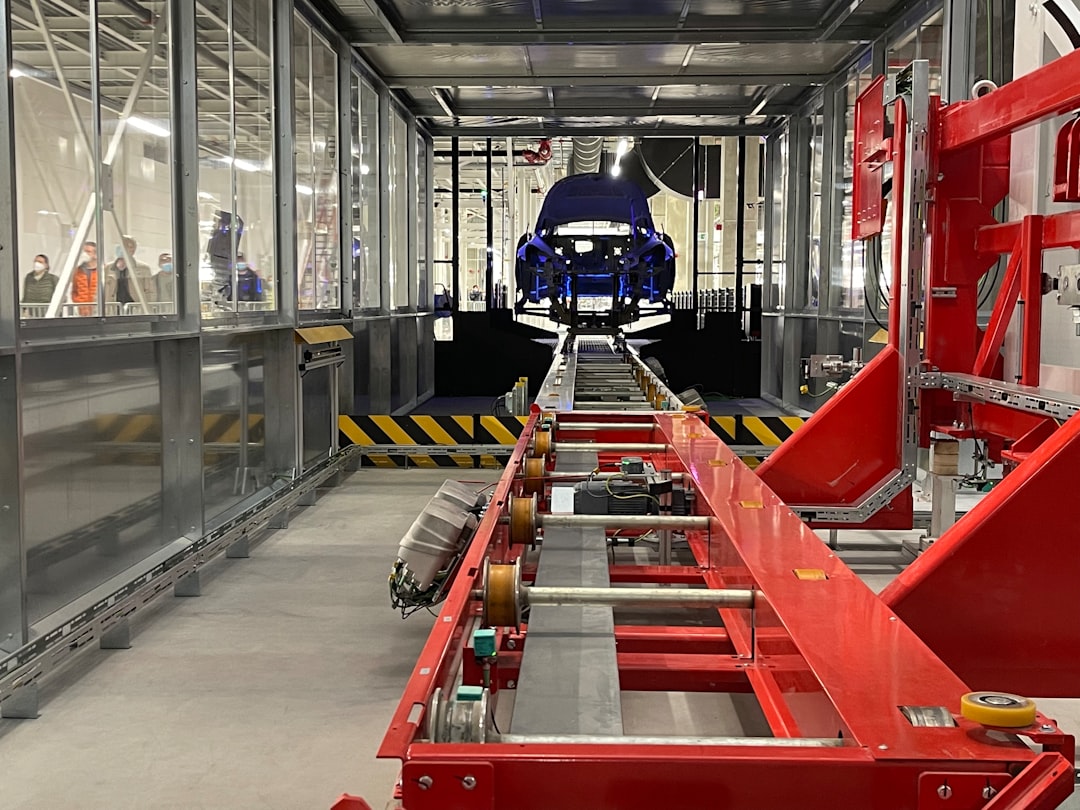
Tesla’s metamorphosis from an electric car startup to a trillion-dollar AI and robotics powerhouse is reshaping industries. Here’s how it all began and where it’s headed.
In 2003, two engineers in California, Martin Eberhard and Marc Tarpenning, founded Tesla Motors, driven by frustration over the abrupt demise of electric vehicles. General Motors had developed the EV1, a functioning electric car that real consumers drove, but it famously recalled and destroyed every one, allegedly succumbing to financial pressures from oil companies and car dealerships. The duo decided to take matters into their own hands, naming their company after Nikola Tesla, the scientist whose innovations underpin electric motor technology.
Challenging the Status Quo
Back in the early 2000s, electric cars were not just rare; they were unappealing. They were often described as unattractive, slow, and impractical—mere novelties. Eberhard and Tarpenning made a pivotal decision: instead of competing with conventional cars in the economy market, they targeted the luxury sports car segment. Their first model, the Roadster, aimed to demonstrate that electric cars could be fast, sleek, and desirable. This would later lead to the development of more affordable options, but their immediate objective was to change perceptions about the very idea of electric cars.
Enter Elon Musk
By 2004, Tesla was struggling to gather the financial resources needed to turn their vision into reality. Enter Elon Musk, who had recently sold PayPal to eBay for $1.5 billion. Musk became Tesla’s biggest investor, writing a $6.5 million check and stepping into the role of chairman. However, tensions between Musk and Eberhard escalated due to rising costs and delays around the Roadster’s development. In 2007, the board removed Eberhard as CEO. By 2008, Tarpenning also left Tesla. While Musk did not found Tesla, his becoming CEO allowed him to reframe Tesla’s origin story, often leaving Eberhard and Tarpenning absent from the narrative. Eberhard even sued Musk over this, but the matter was settled quietly, and their contributions remain overlooked in popular accounts.
Tesla’s Revolutionary Business Model
Unlike traditional car companies, Tesla broke almost every rule in the auto industry playbook. Instead of cheap, mass-market vehicles as a starting point, Tesla followed Musk’s 2006 master plan: start with an expensive sports car (the $109,000 Roadster), use the proceeds to fund a luxury sedan (the Model S, priced around $70,000), and only then attempt to produce a mass-market car—the $35,000 Model 3. This reverse strategy worked, and by 2017, the Model 3 was among the best-selling cars in the United States, electric or otherwise.
Tesla also abandoned the dealer-based sales model. Traditional car manufacturers like Toyota or Ford sell cars through franchises, which reduces control over pricing and customer experience. Tesla opted for direct sales, either through its website or company-controlled “stores.” This streamlined approach secured more profit per vehicle and improved the buying process for customers.
Another unique feature of Tesla’s business model: zero advertising. While other automakers spend billions annually on marketing, Tesla relies entirely on word-of-mouth, Musk’s enormous social media reach, and highly publicized product launches. The buzz around Tesla has proven more effective than traditional advertising campaigns.
Diversifying Revenue Streams
Tesla isn’t simply a car company. It has diversified its revenue with ventures like the Supercharger network, where competitors pay to use Tesla’s charging infrastructure, and energy products like the Powerwall and Megapack, designed for homes and utilities. These additional revenue streams often fly under the radar but demonstrate Tesla’s ability to branch into fields far removed from automobiles.
Why Tesla Isn’t Just a Car Company
Tesla’s most fascinating transformation lies in its evolution from a car manufacturer to an AI-driven technology company. Many self-driving car developers use LIDAR, sensors that employ lasers to map the environment. These systems can cost up to $75,000 per vehicle. Musk, however, deems LIDAR unnecessary and opted to build Tesla’s self-driving system around cameras and artificial intelligence (AI). The company even built a dedicated supercomputer, nicknamed Dojo, powered by 50,000 NVIDIA GPUs, designed to analyze data from millions of Teslas on the road.
What sets Tesla apart further is its approach to AI training. Rather than writing millions of lines of hard-coded rules for driving, Tesla trains its Full Self-Driving (FSD) AI by feeding it real-world human driving data. Over 6 million Tesla cars on the road constantly send back driving data, logging every anomaly and condition encountered. This flood of data enables Tesla to train its AI in real-world conditions at a scale that no competitor can match.
Big Bets on the Future
Tesla’s forward-looking initiatives transcend car sales entirely. The company has dived headfirst into multiple high-risk, high-reward ventures:
-
Robo-Taxi Services: Tesla launched its Robo Taxi service in Austin, Texas, in mid-2025. Featuring autonomous vehicles without drivers, steering wheels, or pedals, these purpose-built vehicles could revolutionize ride-sharing. Musk claims they’ll cost less than taking the bus, with zero labor costs cutting expenses dramatically.
-
Tesla’s Optimus Robot: Early in 2026, Tesla deployed more than 1,000 humanoid robots, called Optimus, into its own factories. Designed to perform repetitive tasks like sorting parts, these robots may eventually outpace Tesla’s vehicle business in importance. Musk aims to produce one million of these robots annually by the end of 2026, pricing them at a startlingly low $30,000 each.
-
Stock Valuations and Beyond: Despite a plummeting net income—Tesla’s profits fell 71% from $15 billion in 2023 to $4.9 million in early 2025—the company’s market cap is still valued at over $1 trillion. Wall Street isn’t betting on Tesla’s current car sales, which have been outpaced globally by China’s BYD; it’s investing in the long game: autonomous driving, robotaxis, and Optimus.
The Hidden Transformation of Tesla
Tesla is no longer just a car company—it’s an AI company, a robotics company, and an energy leader rolled into one. While competitors have successfully chipped away at Tesla’s market share, the company’s bets on autonomy and robotics signal its ambition to redefine entire industries. Whether it will succeed remains uncertain, but what’s clear is that no other company is moving at Tesla’s pace with risks this enormous.
Will Tesla become the dominant force in transportation, robotics, and AI, or will rivals like BYD disrupt its plans? As we watch this play out, Tesla is offering a glimpse into the future of not just mobility, but innovation itself.
Staff Writer
Mike covers electric vehicles, autonomous driving, and the automotive industry.
Comments
Loading comments…


